For decades, Shure has defined the sound of the music industry. Microphones like the SM58, SM7B, and the Unidyne have shaped countless legendary vocal recordings, establishing a legacy of absolute reliability and iconic tone.
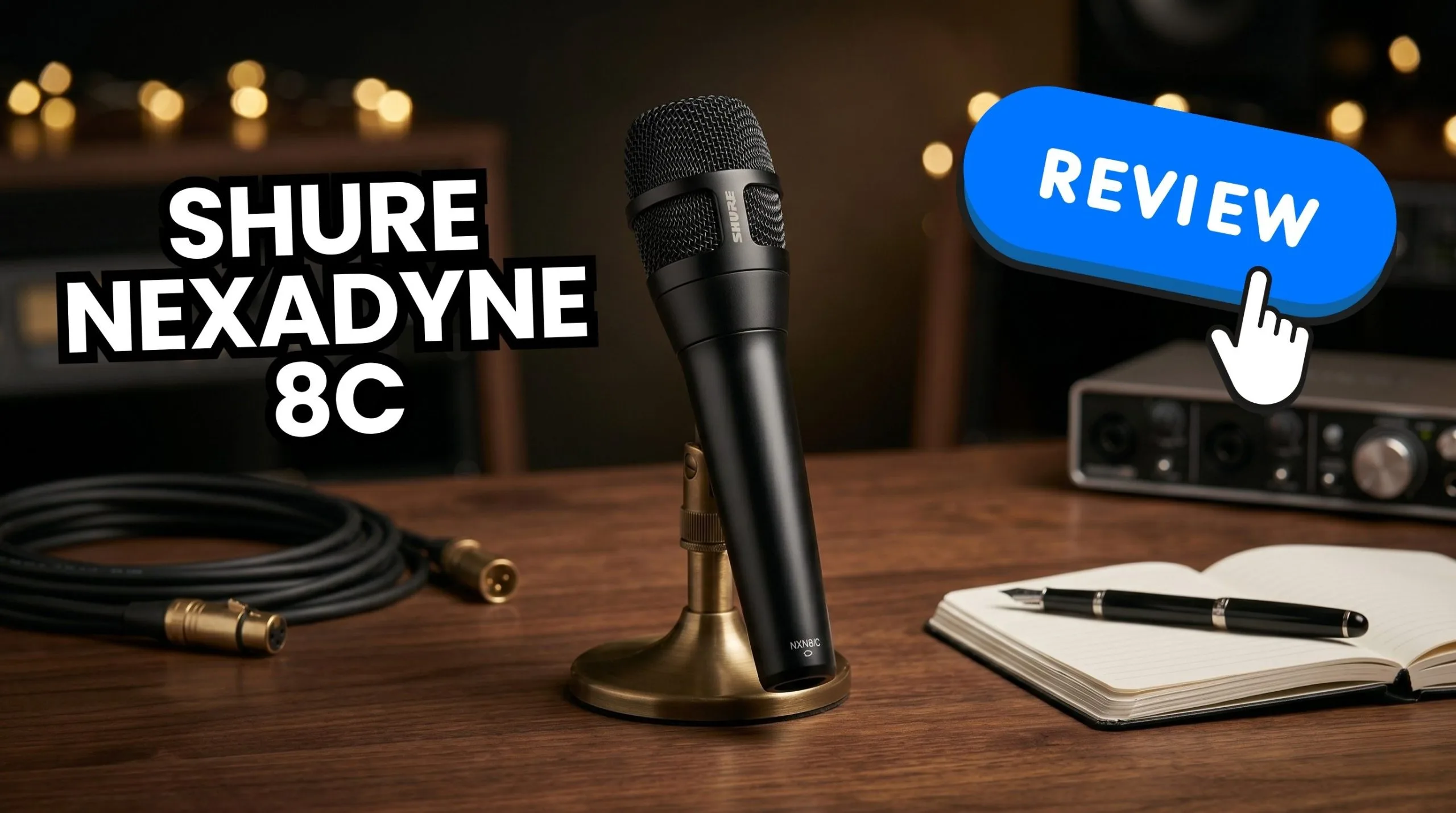
Their recent “Iconic Mic” campaign caught my eye because, for a long time, I’ve been searching for a versatile microphone for both studio and live performances. I wanted something that could finally replace the classic dynamic mic—retaining its indestructible pros while eliminating its traditional cons. That search led me to the brand’s next monumental step forward: the Shure Nexadyne 8C. It is a microphone that builds on that legendary durability but introduces a completely new paradigm in sound capture.
The Test: Microphones & The Recording Chain
To make this a fair and highly detailed shootout, I pitted the new Shure Nexadyne 8C directly against the undisputed industry standard: the legendary Shure SM58.
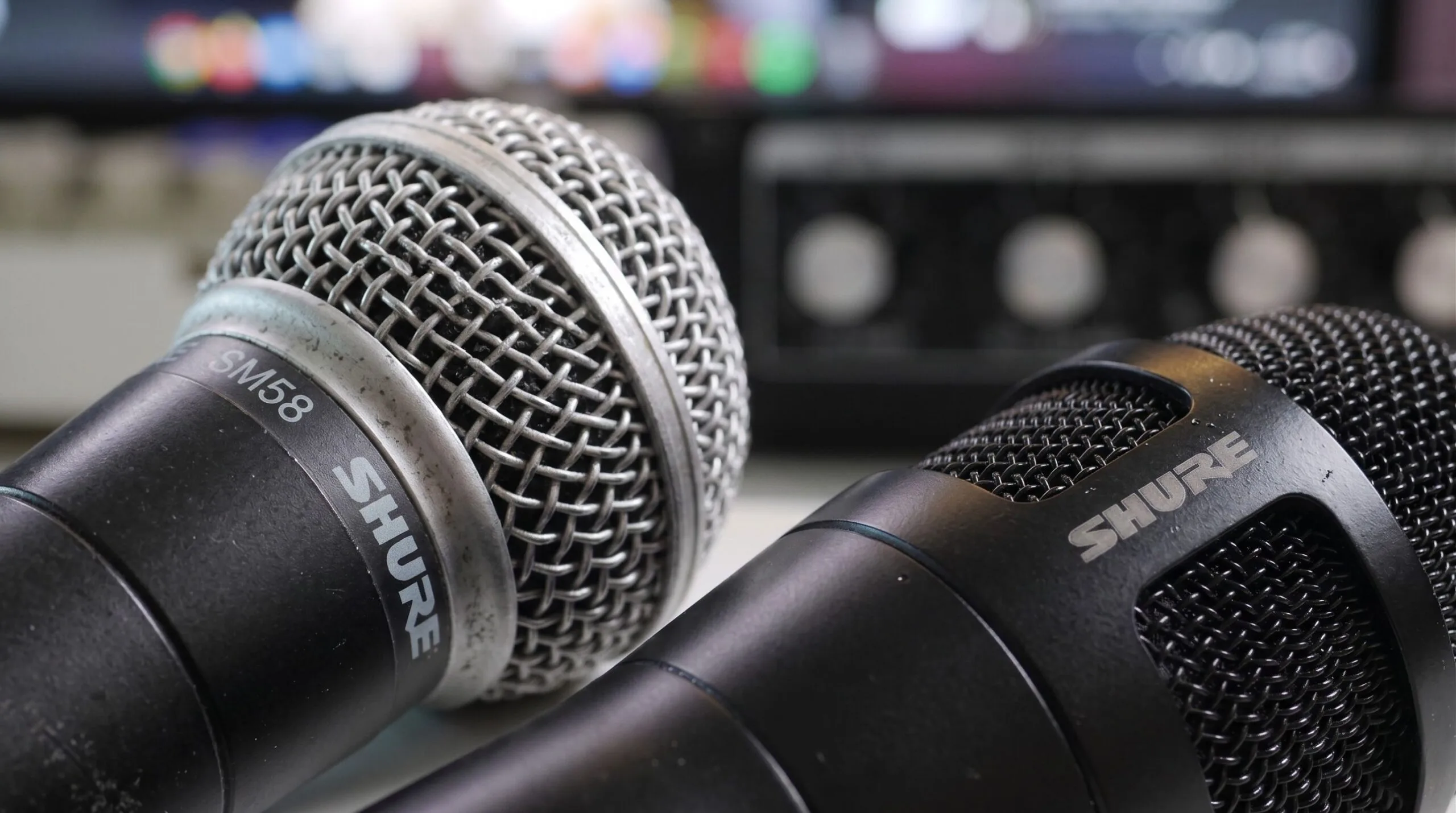
For the recording chain, I wanted a premium, studio-grade signal path to see exactly how these capsules respond to high-end analog character. Here is exactly what I used for the test:
Microphones: The Shure Nexadyne 8C (Cardioid) tested head-to-head against the classic Shure SM58 LC (Cardioid), ensuring a perfectly fair comparison regarding how they interact with room reflections.
Cabling: Sommer Cable Carbokab 225 – My absolute go-to for transparent, interference-free studio routing.
Preamp / Audio Interface: Neve 88M – Providing that massive, classic Neve transformer headroom and punch.
Hardware Processing: For some of the audio examples, I committed to recording with additional analog processing on the way in. I used the Drawmer MQ-2 as my premium outboard hardware processing to see exactly how the Nexadyne and the Shure SM58 take to analog EQ and compression during tracking.
The Tech Deep Dive: Under the Grille
To understand why the Nexadyne series sounds so different, we have to look inside. Unlike standard dynamic microphones that rely on a single cartridge, the Revonic™ Dual-Engine utilizes two perfectly matched transducers working in tandem.
While the top transducer captures the vocal, the second, lower transducer is wired out-of-phase. It acts as an active acoustic resistance engine. This innovative design naturally cancels out mechanical handling noise and unwanted background bleed acoustically, before the signal even hits your preamp.
But there are two other massive technical changes compared to classic Shure designs:
Transformerless Design: Unlike the SM58, the Nexadyne lacks an internal transformer. This makes the microphone noticeably lighter in the hand—weighing in at just 258g compared to the SM58’s 298g. While a 40g difference might not seem huge on paper, you can instantly feel it, especially during long recording sessions or live concerts. Furthermore, without the heavy transformer at the base, the Nexadyne is significantly better balanced, making it much more comfortable to hold for extended periods.
Minimal Acoustic Foam: If you unscrew the grille, you’ll notice there is almost no thick acoustic foam inside—just a fine metallic mesh. Despite this, the dual-engine architecture handles plosives (hard “P” and “B” sounds) surprisingly well, while the lack of dense foam allows for that extraordinary, condenser-like “air” and high-end clarity.
Nexadyne 8C vs. Shure SM58: The Ultimate Showdown
The SM58 is a legend for a reason—it’s indestructible, reliable, and has a classic mid-range warmth. Testing it side-by-side with the Nexadyne 8C isn’t about proving one is “better” than the other; it’s about understanding how fundamentally different they are.
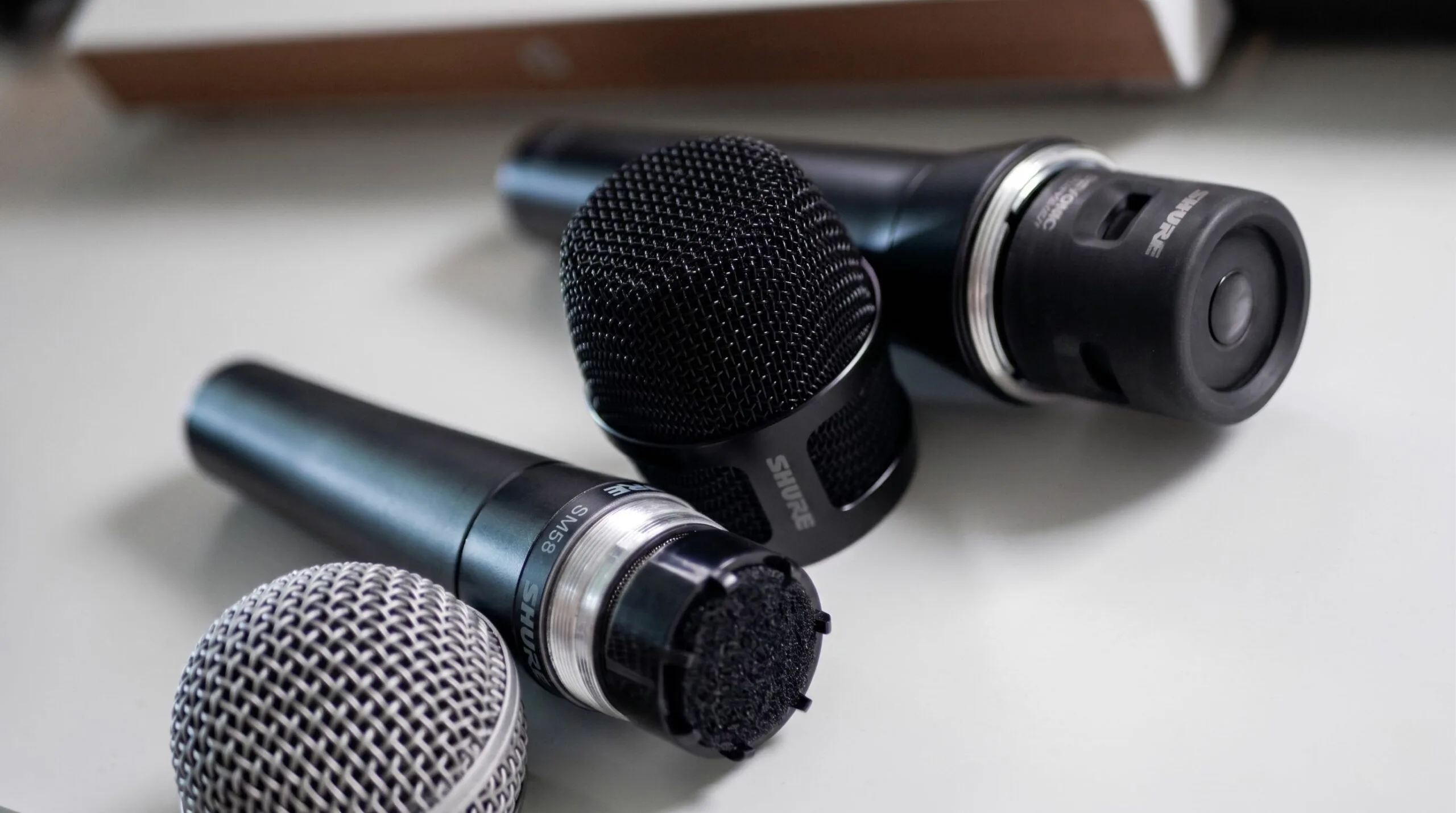
The SM58 remains an outstanding, workhorse microphone with its signature sound. The Nexadyne simply offers something entirely new—a level of detail and precision that can significantly improve the workflow and final audio quality for many audio professionals. Here is how they compare in a direct studio setting:
1. Frequency Response & EQ Independence
The SM58’s high-end rolls off relatively early, requiring heavy EQ boosting to get modern pop or electronic vocals to shine. The Nexadyne 8C extends beautifully into the upper frequencies. Furthermore, it is incredibly resistant to that muddy, boxy 200-500 Hz buildup that often plagues home studio recordings.
2. Sensitivity and Gain Requirements
Many producers worry that buying a modern dynamic vocal mic means they instantly need to buy an expensive inline booster (like a Cloudlifter) to get a usable signal. While this is true for studio broadcast standards like the Shure SM7B, the Nexadyne 8C outputs a very healthy signal level (–54.0 dBV/Pa). This makes it almost identical to the classic SM58 (–54.5 dBV/Pa) in terms of gain requirements, with a virtually imperceptible 0.5 dB difference. During my tests on the Neve 88M, I easily achieved an excellent tracking level without pushing the preamps to their noisy limits. It works perfectly with standard audio interfaces straight out of the box.
3. A Very Forgiving Proximity Effect
One of the most impressive things about the Nexadyne is how it handles vocalists with poor mic technique. With the SM58, if you move an inch back, the tone thins out immediately. The Nexadyne has an incredibly forgiving proximity effect—meaning the vocalist can sway or move back and forth, and the core tone remains stable. In the studio, this saves you hours of tedious volume automation.
4. Natural Bleed Response
If you record live bands “in the room” together, you will love this mic. When drum cymbals bleed into a standard presence-boosted dynamic mic, they often sound harsh and brittle. The Nexadyne captures off-axis bleed in a much more natural, uncolored way, making it much easier to mix a full band.
5. Transient Response & Precision
To see exactly how fast the capsule reacts, I recorded sharp percussive elements—specifically a glockenspiel and hard drumstick hits. Dynamic microphones are notorious for slightly smearing fast attacks, but the Nexadyne’s dual-engine design responds incredibly fast. It captures the initial “crack” of the sticks and the high-frequency chime of the glockenspiel with a condenser-like precision that the SM58 simply rounds off.
6. Taking to Analog Processing (EQ & Compression)
To see how these microphones handle identical signal shaping, I ran both through the Drawmer MQ-2, applying the exact same analog EQ and compression settings. The Nexadyne is incredibly malleable—it took to the processing effortlessly, allowing me to reach the desired vocal tone much faster. The Shure SM58 handled the processing well, as it always does, but it simply required a bit more manual “sculpting” to achieve a similarly polished, modern sound.
Download My Raw Audio Samples (Free)
I believe that hearing is believing. Instead of just reading about this “condenser-like clarity,” I want you to test these files directly in your own DAW. I’ve prepared a high-resolution Nexadyne 8 Audio Samples (recorded at 48 kHz / 32-bit float), featuring raw male and female vocal takes, analog-processed stems through the Drawmer MQ-2, the percussion transient tests (glockenspiel and drumstick hits), and dry A/B comparisons with the SM58.
Note: The pack is hosted on my store. Just add it to your cart and complete the free checkout process (no payment details required) to get your download link!
Which Version to Choose? Nexadyne 8C vs 8S
Shure released the Nexadyne in two different polar patterns. Both feature the exact same dual-engine technology and sound quality, but they interact with your room and monitors differently.
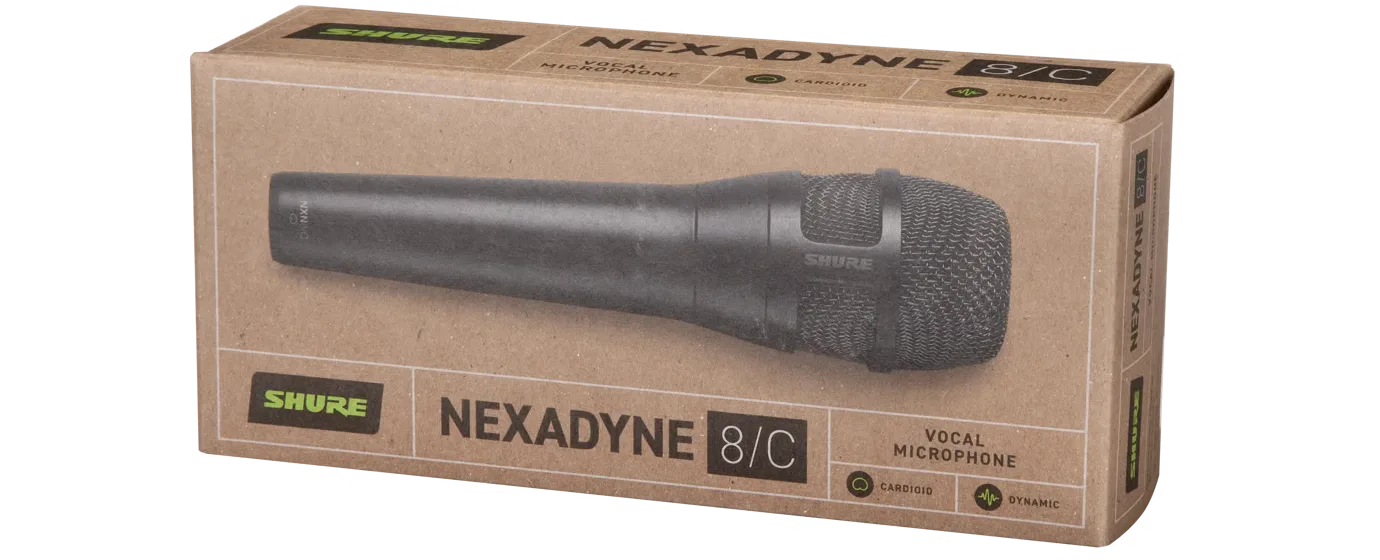
1. Shure Nexadyne 8C (Cardioid)
This is the version I used for my studio tests. The classic cardioid pattern offers a natural, forgiving sweet spot. It actively rejects sound from directly behind the mic, making it perfect if you have a single studio monitor or a window directly in front of the vocalist. It also handles slight off-axis movement surprisingly well.

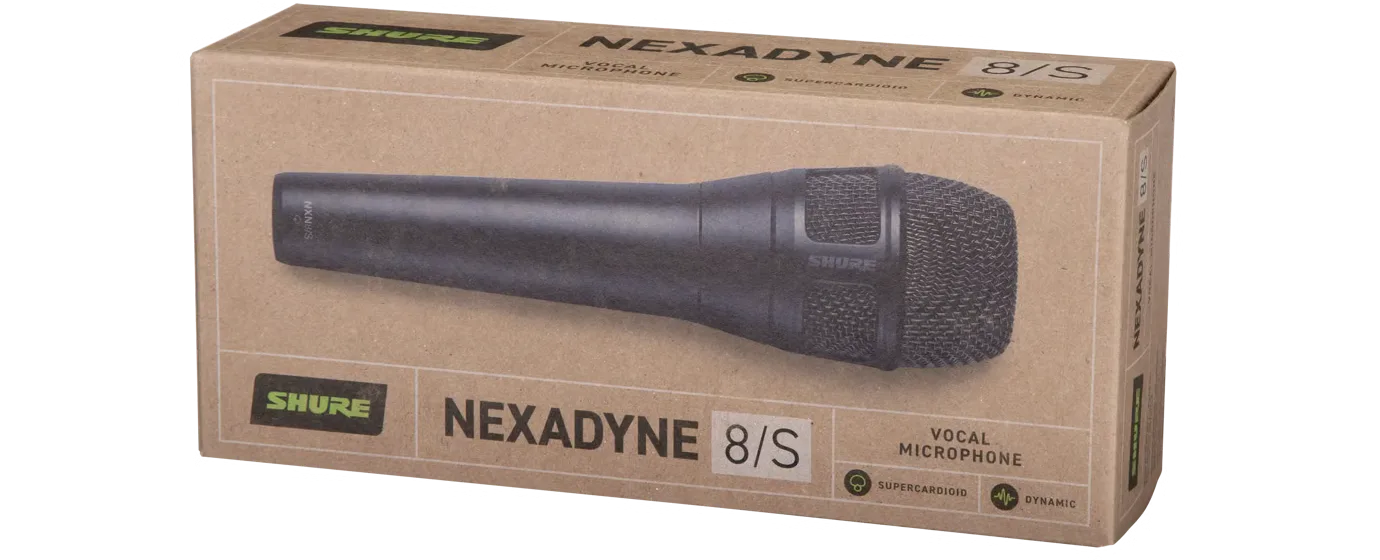
2. Shure Nexadyne 8S (Supercardioid)
The supercardioid version has a tighter pickup pattern. Because of how it rejects sound, it is designed to work best with sources of noise coming from two angled directions rather than straight behind the mic. If you track vocals in a room where reflections bounce off angled side-walls, or if you record live bands in the same room, this version will give you maximum isolation.
Pro Tip: If you already own a wireless Shure setup in your studio or live rig, you don’t need to buy a completely new microphone! Shure sells the Nexadyne 8C and Nexadyne 8S capsules separately, making it incredibly easy to swap out your old SM58 or Beta 58 heads for the new Revonic technology.
Thinking About the Upgrade? Pros & Cons
✔ Pros
- • Unmatched, condenser-like clarity for a dynamic mic
- • Incredibly forgiving proximity effect (great for moving vocalists)
- • Natural off-axis rejection (cymbal bleed sounds pleasant, not harsh)
- • Available as standalone capsules for existing Shure wireless systems
✖ Cons
- • Noticeably higher price point than standard single-capsule dynamics
- • Its extreme detail may reveal flaws in a weak vocal take
Final Thoughts – Shure Nexadyne 8C Review
The Shure Nexadyne 8C isn’t just a marginal update to an old design; it’s a completely new paradigm for vocal recording. For producers who demand the pristine, mix-ready results of a condenser but desperately need the workflow, room-rejection, and durability of a dynamic mic, this is the new gold standard.
It has officially replaced my older dynamics and earned a permanent place in my daily recording chain. If you want a vocal sound that effortlessly slices through dense, synth-driven music, the Nexadyne 8 is the upgrade you’ve been waiting for.
Looking for more studio gear advice? Check out my other studio gear and synth reviews.